Push Starting, Jump Starting, and Why Modern Technology Matters
Every professional technician and at-home auto enthusiast has to deal with a dead battery at some point. It comes with the territory. Decades ago, drivers and auto techs didn’t necessarily need jumper cables and a rescue vehicle to get a dead car going. They could push-start the car. Also known as bump starting, push-starting has all but vanished because of modern automotive technology.
If you are an entry-level tech or a savvy DIYer, do not simply dismiss push-starting as a relic of the past. Understanding why it worked, why it faded away, and how modern jump-starting options differ will help you in your future vehicle recovery efforts.
Push Starting: What Is It and Why Has It Disappeared?
Push-starting relies on kinetic energy to turn over an internal combustion engine. By contrast, battery-based jump-starting relies on electrical energy. Also note that it is impossible to push-start a car with an automatic transmission. The trick only works on manual transmission cars, which is one of the reasons the practice has all but disappeared.
To push-start a car, you first switch the ignition to the ‘on’ position and depress the clutch. You shift the transmission into first or second gear. Next, you need to get the car in motion. Back in the old days, we used to engage a couple of friends to help push or just roll the car down a hill.
Once you reach a speed of 5-10 mph, you quickly pop the clutch by taking your foot off. The momentum of the rolling drive wheels sends energy through the transmission and back to the engine, where the crankshaft rotates, fires the pistons, and starts the engine
As for why you virtually never see push-starting anymore, it boils down to the following:
-
Automatic Transmissions – The automotive market, at least in the U.S., is dominated by automatic transmissions. An automatic transmission requires internal hydraulic pressure, but without power from the engine, there isn’t enough pressure to engage the clutch.
-
Electronic Control Modules – Modern vehicles (even the rare ones with manual transmissions) need electrical current to activate fuel injectors, electronic throttle bodies, and high-energy ignition coils. Rolling a car doesn’t generate enough current to power these modules.
With ush-starting no longer being an option, rescuing a vehicle with a dead battery requires electrically driven jump-starting. That basically leaves mechanics and DIYers with two options.
Jumper Cables or Portable Power
The two options are jumper cables and a rescue vehicle or portable power made available through a jump starter or booster pack. Clore Automotive recommends the latter. Nonetheless, let’s briefly examine both options.
1. Jumper Cables
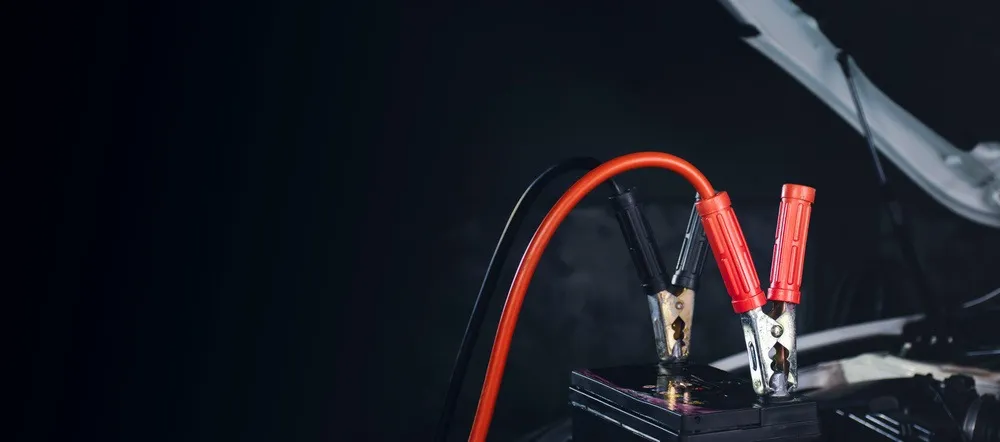
Starting a dead car with jumper cables requires the cables themselves along with a rescue vehicle that is currently running. It works well enough if you know what you are doing, but there are some notable risks and challenges:
-
Dangerous voltage spikes.
-
Improper connections that can damage vehicles.
-
Space constraints (it’s not always easy to get the rescue vehicle close enough)
2. Portable Jump Starter
A portable jump starter is essentially a high-powered lead-acid or lithium battery housed in a plastic case. It connects directly to the dead car in the same way jumper cables do. It offers several advantages over jumper cables and rescue vehicles:
-
Isolated power delivery.
-
Consistent peak amperage.
-
Single-person recovery.
-
Little to no space constraints.
Clore Automotive also says that portable jump starters are now the default choice among professional technicians. The pros don’t bother with jumper cables and rescue vehicles anymore. If you are a DIYer, you might want to follow their lead. Push-starting is dead, but portable jump starters are alive and well.